

Sensorimotor & Hyperawareness OCD Test
Medically Reviewed by Aheesha Chopra (Therapist/ Psychologist)
Answer these simple questions to understand more about Sensorimotor OCD Assessment. We share instant results and keep your information confidential.
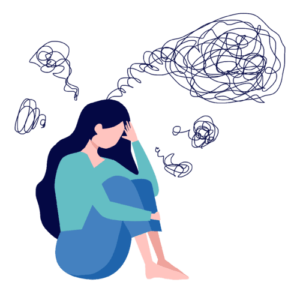
What is a Sensorimotor (Hyperawareness) OCD Assessment?
A sensorimotor ocd test is a clinical screening tool designed for those who have become hyper-focused on involuntary bodily functions. While most people breathe or blink without thinking, individuals with Hyperawareness OCD find their attention “stuck” on these processes. This somatic ocd assessment evaluates the level of distress caused by this sensory focus and identifies the mental rituals you may be using to try and “reset” your attention.
Common Symptoms of Somatic and Sensorimotor OCD
If you feel trapped by your own sensory perceptions, this self-screening tool can provide clarity. Common indicators of Sensorimotor OCD include:
- Breathing Obsessions: A constant, manual focus on setiap breath, often leading to a fear that you will stop breathing if you stop paying attention.
- Blinking & Swallowing: Becoming hyper-aware of how often you blink or the sensation of swallowing, often resulting in a “not-right” feeling.
- Eye Movement Focus: Noticing every time your eyes move or “floaters” in your vision to a point of extreme distraction.
- Pulse & Heartbeat: An obsessive need to monitor your heart rate or the “thumping” sensation in your ears.


Sensorimotor OCD Assessment Accuracy
Our sensorimotor ocd test online is specifically calibrated to distinguish between general health anxiety and the “hyper-fixation” cycle of Somatic OCD. It measures the persistence of the sensory focus and the anxiety that arises when you try to shift your attention away.
While this tool is a highly accurate way to identify hyperawareness symptoms, it is not a formal medical diagnosis. Because this subtype can be particularly distressing, we recommend reviewing your results with a therapist trained in Exposure and Response Prevention (ERP). ERP for Sensorimotor OCD focuses on “sensory habituation,” helping your brain return these functions to the background of your awareness.
Types of Sensorimotor OCD Assessment
Clinical Interview:
A detailed clinical interview with a mental health professional is often the first step in assessing Sensorimotor OCD. The clinician will ask questions about the individual’s symptoms, their history, the duration and intensity of symptoms, triggers, and any related distress or impairment.
Self-Report Questionnaires:
Various self-report questionnaires can help assess the severity of Sensorimotor OCD symptoms and their impact on an individual’s life. The Yale-Brown Obsessive Compulsive Scale (Y-BOCS) is a commonly used tool that measures the severity of OCD symptoms, including Sensorimotor symptoms.
Structured Clinical Interviews:
Tools like the Structured Clinical Interview for DSM Disorders (SCID) can help clinicians systematically assess for the presence of specific OCD symptoms, including those related to Sensorimotor OCD.
Diagnostic Criteria:
Assessing whether the individual’s symptoms align with the diagnostic criteria for OCD, as outlined in the Diagnostic and Statistical Manual of Mental Disorders (DSM-5), is an important step. For Sensorimotor OCD, symptoms might involve obsessions and compulsions related to bodily sensations or movements.
Observational Assessments:
In some cases, clinicians might observe the individual’s behavior to gain insights into their symptoms. This might involve noting any repetitive movements, behaviors, or rituals that are indicative of Sensorimotor OCD.
Functional Assessment:
Understanding how Sensorimotor OCD symptoms impact an individual’s daily functioning is crucial. Assessing how these symptoms interfere with work, relationships, and overall quality of life helps determine the level of impairment.
Handling Sensorimotor OCD Issues
Sensorimotor OCD, also known as “Pure-O” OCD, is a subtype of obsessive-compulsive disorder (OCD) where individuals experience distressing obsessions related to bodily sensations, movements, or internal processes. These obsessions often lead to compulsive behaviors or mental rituals in an attempt to alleviate the distress. Here are some steps that might help in handling sensorimotor OCD issues:
- Educate Yourself: Understand what sensorimotor OCD is and how it manifests. Learning about the nature of OCD can help you recognize the symptoms and differentiate them from other issues.
- Professional Help: Consult a mental health professional, preferably one with experience in treating OCD. Cognitive-behavioral therapy (CBT), particularly Exposure and Response Prevention (ERP), is considered the most effective treatment for OCD. ERP involves gradually exposing yourself to the feared sensations or situations while refraining from engaging in compulsive behaviors.
- Medication: In some cases, medication may be recommended by a psychiatrist. Selective serotonin reuptake inhibitors (SSRIs) are commonly prescribed for OCD, as they can help alleviate the symptoms.
- Mindfulness and Acceptance: Practicing mindfulness can help you become more accepting of uncomfortable sensations without trying to control or eliminate them. Mindfulness meditation can help you observe your sensations without reacting to them compulsively.
- Exposure Exercises: Work with your therapist to create a hierarchy of exposure exercises that gradually expose you to the sensations that trigger your obsessions. This can help you build tolerance to the distress and reduce the urge to perform compulsive behaviors.
- Response Prevention: Refrain from engaging in the compulsive behaviors that you use to relieve the distress caused by your obsessions. Over time, this can help weaken the connection between the obsessions and the need to perform rituals.
- Challenge Negative Thoughts: Challenge the irrational beliefs associated with your obsessions. OCD tends to be driven by irrational fears. Learning to challenge these thoughts can help reduce their power over you.
- Practice Self-Compassion: Be kind to yourself and understand that you’re not defined by your OCD. It’s a condition you’re dealing with, and recovery takes time and effort.
- Healthy Lifestyle: Maintain a balanced lifestyle with regular exercise, proper nutrition, and adequate sleep. Physical well-being can have a positive impact on your mental health.
- Support System: Share your struggles with trusted friends or family members. Having a support system can make the journey less isolating and more manageable.
- Journaling: Keeping a journal can help you track your progress, note triggers and patterns, and express your thoughts and emotions.
- Distraction Techniques: Engage in activities that occupy your mind and prevent you from focusing on the distressing sensations. This can help reduce the intensity of the obsessions.
Remember that progress might be gradual, and setbacks are normal. Patience and consistent effort are key components of managing sensorimotor OCD. Working closely with a mental health professional will provide you with the guidance and tools needed to address these challenges effectively.
FAQs on Sensorimotor OCD
Sensorimotor OCD is a subtype where the person becomes hyper-aware of automatic bodily processes. Common fixations include breathing, blinking, swallowing, eye floaters, or the position of the tongue. The “obsession” is the sensation itself, and the “compulsion” is the constant monitoring or trying to “control” the function.
Usually, the brain filters out these sensations. In Sensorimotor OCD, the brain’s “filtering” mechanism glitches, tagging a neutral sensation as a threat. Once you become afraid that you’ll “never stop noticing it,” your brain stays hyper-vigilant, keeping the sensation at the forefront of your mind.
Compulsions include Hyper-monitoring (constantly checking to see if you’re still noticing the sensation), Scanning (checking the body for other sensations), and Mental Distraction (trying to force yourself to think of something else, which paradoxically keeps the focus on the sensation).
The goal is habituation. Through Exposure and Response Prevention (ERP) and Mindfulness, you practice inviting the sensation in. Instead of running from the feeling of your breath, you lean into it without trying to change it. Eventually, the brain gets “bored” of the sensation and begins filtering it out automatically again.